Performance Upgrades Work Best With a Plan
Power parts work better when tuning, cooling, fuel, braking, and driveline support are planned together instead of added one at a time.
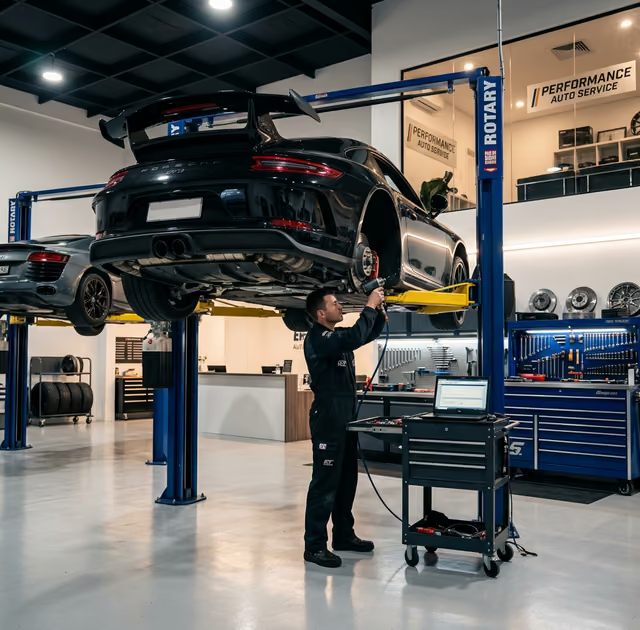
More power is easy to talk about and much harder to do well.
The strongest upgrades usually come from a sequence, not a pile of parts. When a project skips that planning step, the result is often a car that makes a bigger number on paper but loses drivability, reliability, or traction in the real world.
A smarter upgrade path usually looks like this:
- Start with the goal for the car: street response, track time, towing confidence, or straight-line power.
- Match airflow and fueling changes to the calibration strategy.
- Support the extra output with the right cooling, braking, and driveline hardware.
- Leave room in the budget for tuning time, supporting-system upgrades, and the small parts that make the package work together.
That matters whether the next move is a turbo setup, ECU recalibration, suspension package, or exhaust upgrade. Parts added without a plan often force customers to redo work they already paid for.
At Torque & Tune, performance work is meant to feel coordinated. The goal is not just to install hardware. It is to create a package that behaves the way the driver expects when the throttle opens, the road tightens up, or the next phase of the project starts.
If you are mapping out the next upgrade, bring the target, the current setup, and the way the car is used. From there, the shop can help turn the idea into a cleaner performance and tuning plan.
Topics covered
Next step
Planning performance upgrades or tuning?
Performance work starts with a planning call. Share your goals, current mods, and budget range so the team can scope the right upgrade path.
Keep exploring
Keep exploring before you book
Browse the shop gallery, customer reviews, and service pages that match this note if you want more proof before you contact the team.
Related shop notes
 Field-tested
 Performance Mods Need Cooling, Brakes, and Driveline Support
Power parts land better when braking, cooling, traction, and driveline support are planned before the next horsepower step.
 Field-tested
 Daily-Driver Performance Plans Should Start With Reliability
When the same car has to commute, handle errands, and still feel better on the weekend, maintenance, diagnostics, and supporting hardware should lead the upgrade plan.
 Field-tested
 Arizona Heat Vehicle Maintenance Beyond the Thermostat
Mesa drivers should watch cooling, batteries, tires, fluids, and electrical symptoms before Arizona heat turns small issues into breakdowns.